SkillsCamp
The People Practice
 

Hey, it's Dr. Bailey

Have you ever been in a meeting where two smart people disagreed and it got awkward, and then nobody addressed it again? I have been sitting with that lately. Because that silence afterward is where the real cost lives. The disagreement was not the problem. The fact that no one knew what to do with it was

What is the hardest type of disagreement to navigate on your team? Hit reply and tell me. I read every one.

In this week's edition:

  • What's Coming Up at SkillsCamp

  • What Happens When You Keep People at the Centre

  • My Team Has Strong Opinions and It's Starting to Crack

  • Four Leadership Traps Hiding in Your Team's Dynamics

Dr. Bailey Parnell Dr. Bailey Parnell
 

Join the Conversation

What's Coming Up at SkillsCamp

ONGOING: OpenStudio by SkillsCamp Events for people leaders who want practical tools and space to think with peers. Each session takes a timely leadership challenge and works through it with real-world examples and strategies you can use right away.

Check it out.


From the Field

What Happens When You Keep People at the Centre

What Happens When You Keep People at the Centre

I was recently featured in a Speakers Spotlight piece alongside five other experts in leadership, communication, and the future of work. They asked us all one question: how do you lead better and keep people at the centre as AI reshapes the way we work?

It is a question I think about constantly, both in my doctoral research and in the work we do at SkillsCamp every day. My answer keeps coming back to the same place: the biggest leadership challenges of AI adoption are human in nature. The skills that become more valuable as AI enters the workflow are the ones we have always needed but rarely invested in with the same urgency: building trust, navigating difficult conversations, designing work around people's strengths, emotional intelligence, relational intelligence, or reconnecting teams to shared purpose.

What it means for us as people leaders:

AI does not replace the need for human skills. It raises the stakes on them.
When AI handles more of the technical and routine work, what remains is the relational, the ambiguous, and the deeply human. That is where our teams need us most right now.

Start with what your people actually need to hear.
Before you roll out another tool or initiative, ask your team what they are worried about. The conversation itself builds the trust that every successful AI transition depends on. This is called human readiness in my three-pillar framework.

Read Dr. Bailey's feature
Read the full Speakers Spotlight feature


Sage Advice

My Team Has Strong Opinions and It's Starting to Crack

My Team Has Strong Opinions and It's Starting to Crack

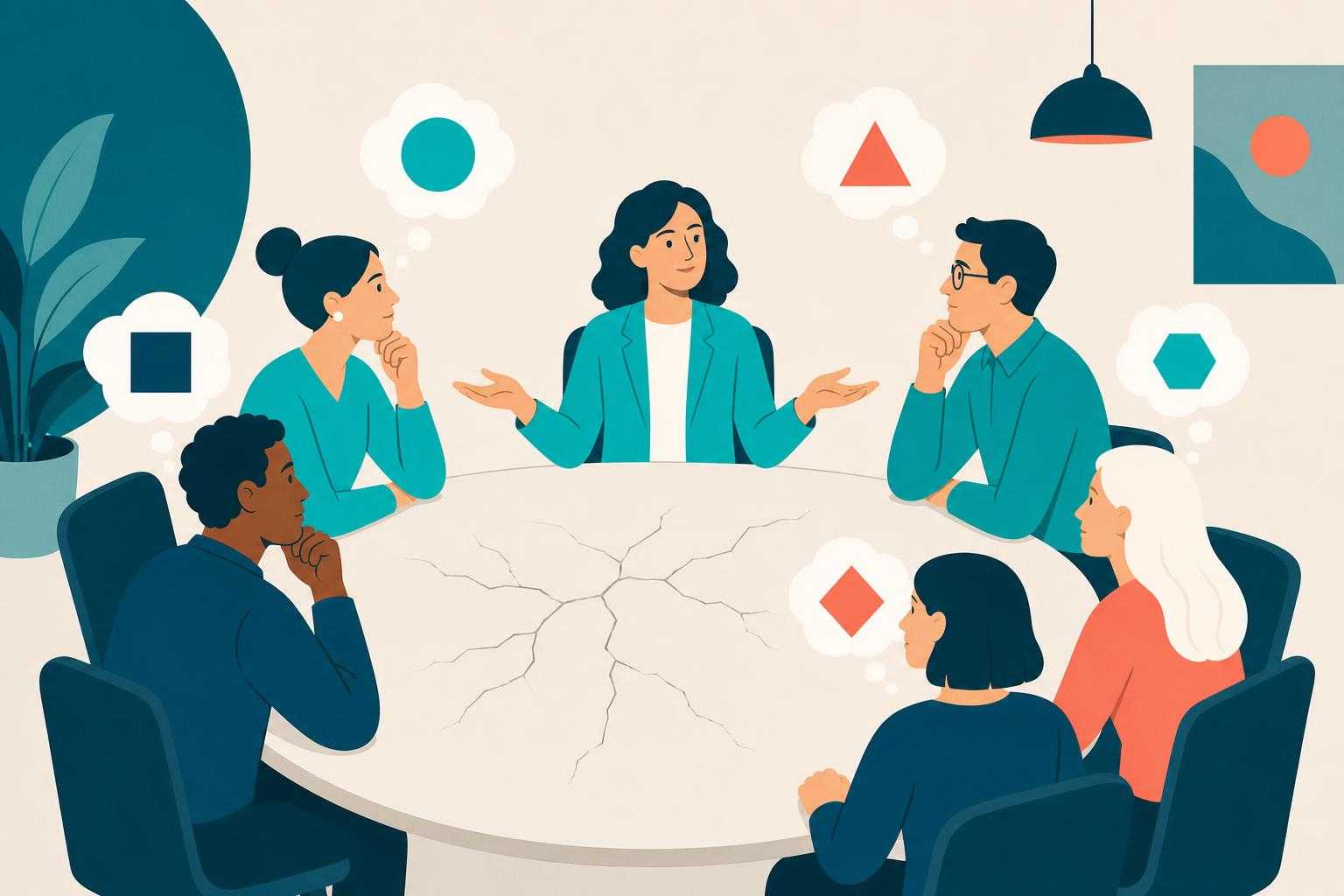
A reader writes: "I lead a team of really capable people who each bring strong, different perspectives. It used to feel like a strength. But lately the disagreements linger after meetings, people are going quiet in different ways, and I can feel the dynamic shifting. I do not want to flatten the differences because that is what makes us good. But I also cannot let this keep eroding trust. What do I do?"

This is one of the most common tensions I hear from people leaders, and it tells me something important: you are paying attention. A lot of leaders would not even notice the shift until it became a full rupture. The fact that you can feel it means you still have time to address it.

Acknowledge the shift directly.
If you can feel it, so can they. Name it in a team setting without blame. Something as simple as "I have noticed our disagreements are landing differently lately, and I want us to talk about that". This gives your team permission to stop pretending everything is fine.

Create a "how we disagree" agreement.
Teams that talk about their process for handling friction before it gets personal build more durable trust. Sit down together and decide: when we disagree, what does good look like? What do we owe each other afterward? How does each person prefer to be addressed in conflict? This kind of scaffolding turns tension into something the team can actually use.

Check your own pattern.
Are you siding with one voice more than others without realizing it? That small signal can fracture a team faster than any argument. Your people are watching where your attention goes, and they are drawing conclusions from it every day.

Love you!


What We're Watching

Four Leadership Traps Hiding in Your Team's Dynamics

Four Leadership Traps Hiding in Your Team's Dynamics

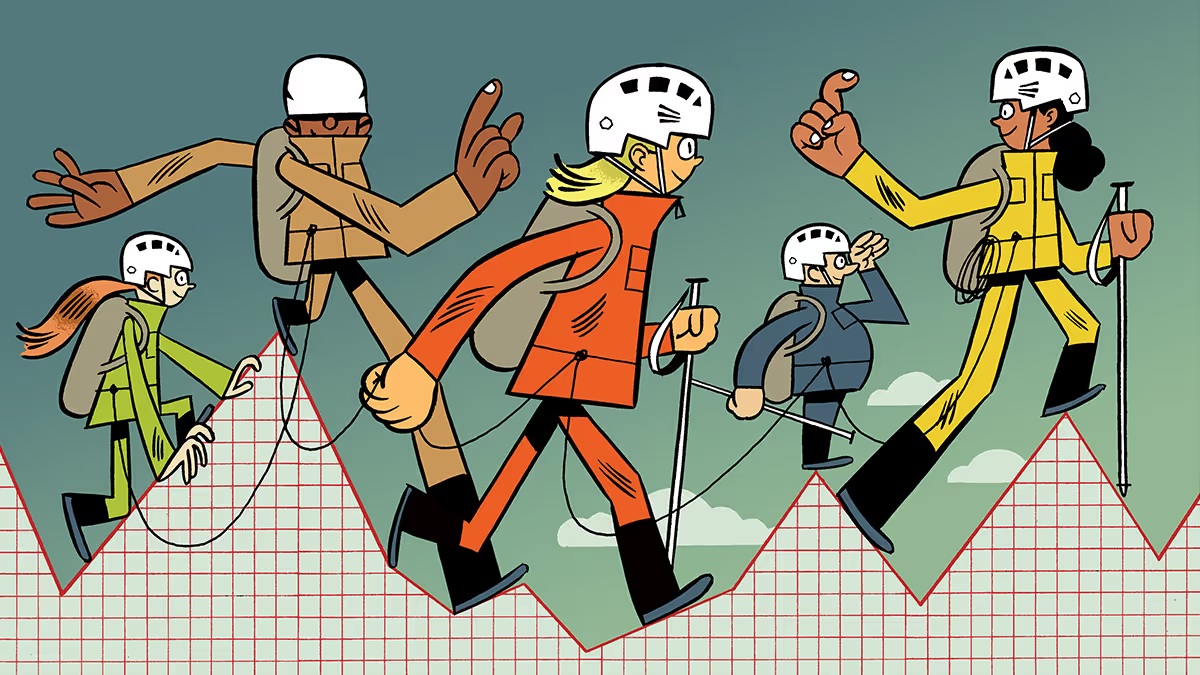
Harvard Business Review just published a piece worth noting. Researchers Susan MacKenty Brady, Stuart D. Kliman, and Leslie C. Smith identified four patterns that quietly erode trust and collaboration on teams: certainty (assuming you already have the right answer), inconsistency between words and actions, emotional reactivity, and self-justification.

Their argument is one I believe deeply: difference is the raw material for creating value on a team. But it only works when leaders can navigate the friction that comes with it. When we fall into these four traps, we shut down the very thing that makes diverse perspectives powerful.

What stood out to me from the research:

The traps are invisible to the person caught in them.
That is what makes them so dangerous. A leader who is certain they are right does not experience themselves as closed off. They experience themselves as clear. The gap between intent and impact is where trust quietly disappears.

The antidote is practice, not just awareness.
The authors offer six concrete actions: cultivate self-awareness, return to respect during conflict, communicate with candor, seek the full story before drawing conclusions, foster shared ownership, and reinforce these behaviours through consistent action. What I appreciate is that none of these are abstract ideals. They are daily choices.

This maps directly to what we see in our work at SkillsCamp. The most capable teams are the ones whose leaders have learned to hold the tension long enough for something useful to come out of it.

Read the full HBR article

 

Subscribe

Did someone forward you this?

Did someone forward you this?

Then someone in your world thought of you, which tells me you are the kind of person people trust with this work. Subscribe here and The People Practice will land in your own inbox every Friday.


Thanks for reading!

Don't want to receive these emails? There's an unsubscribe button at the bottom.


Copyright Skills Camp 2026

20 Iannuzzi Street, TH9, Toronto, ON, M5V0A2